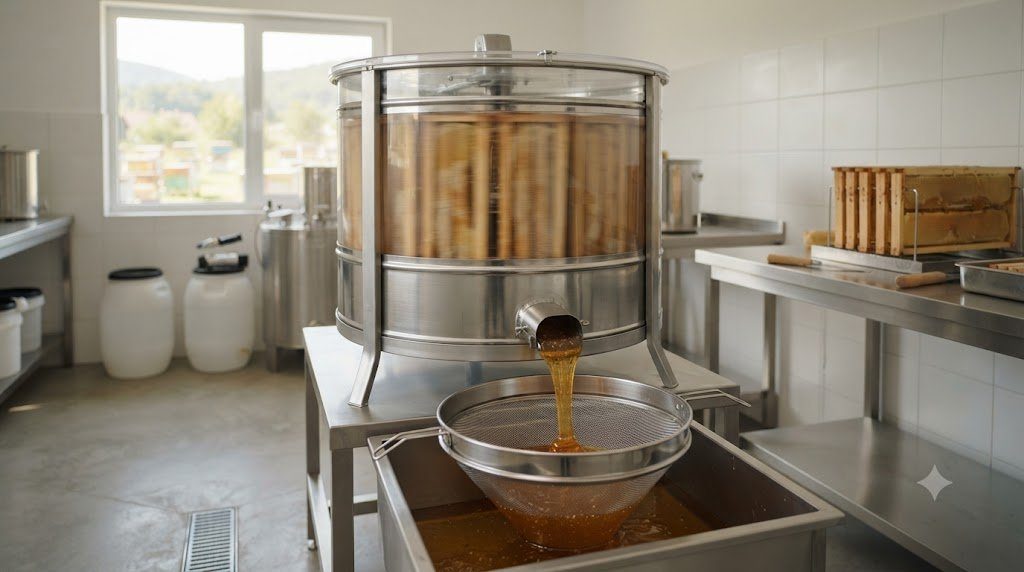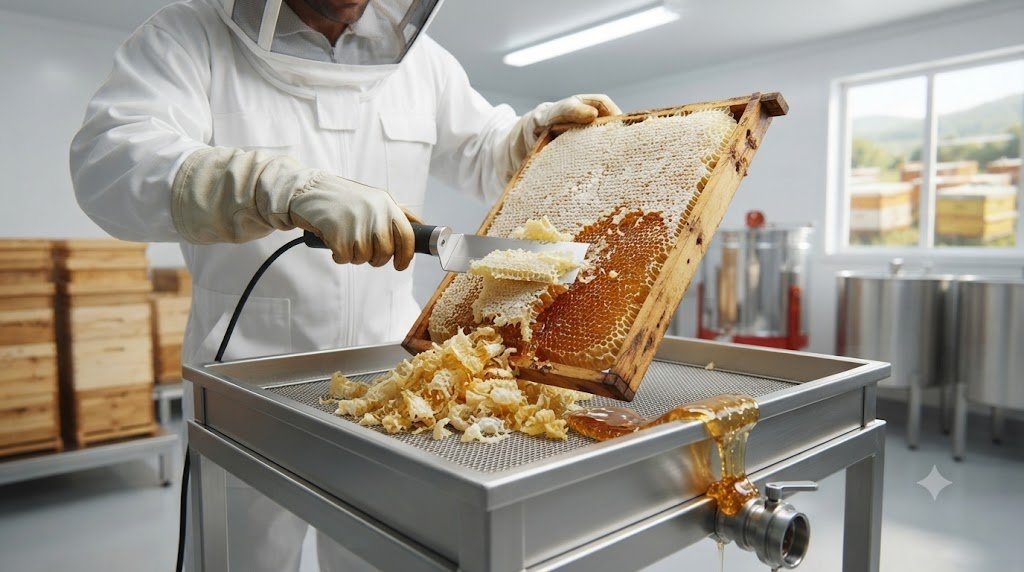
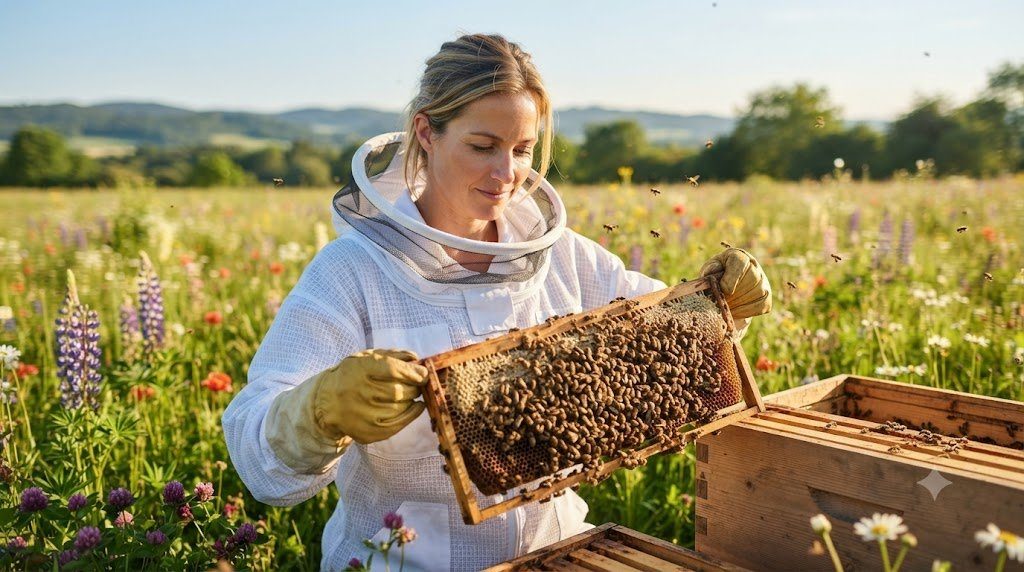
Honey Harvesting, Uncapping, and Refractometry: Moisture Control Below 18.6% and Fermentation Prevention
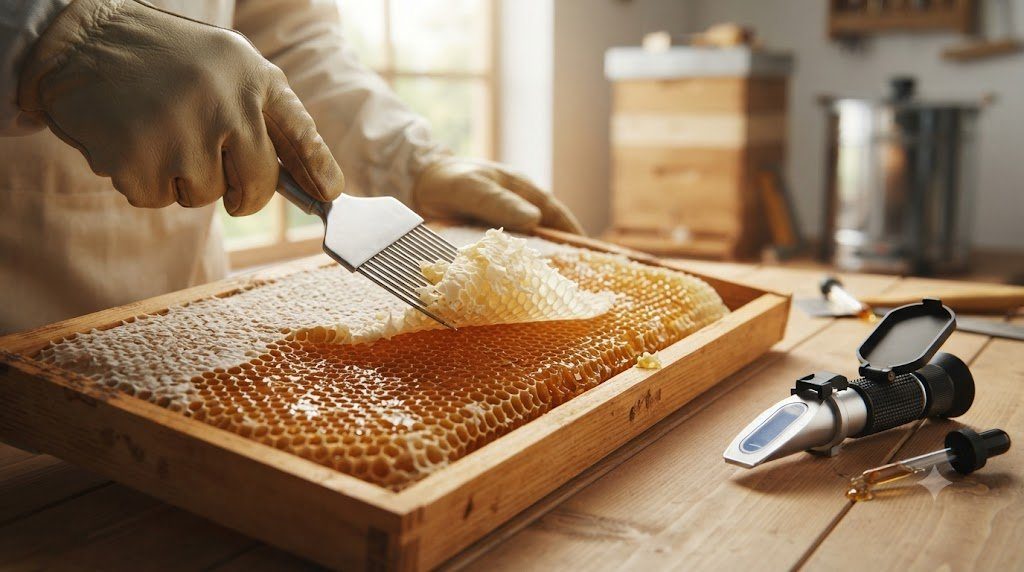
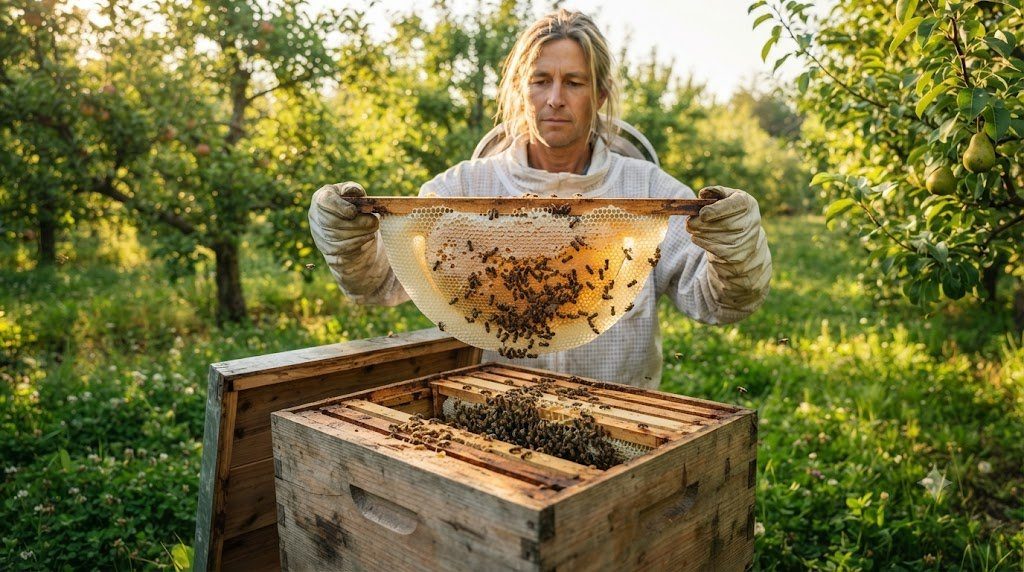
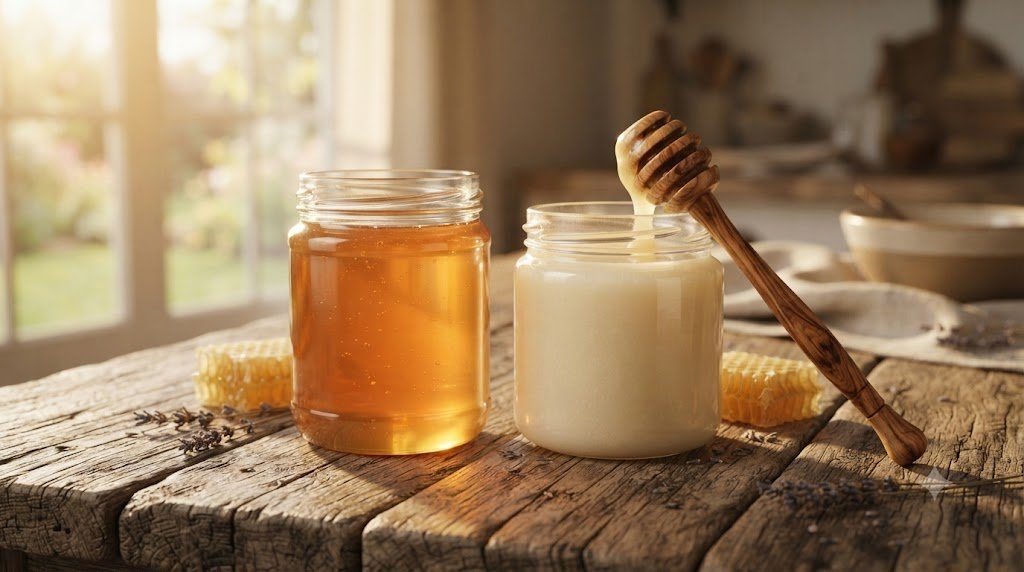
There are few heartbreaks in beekeeping worse than harvesting 200 pounds of fragrant summer honey, bottling it in glass jars, and opening your pantry three months later to find foaming, sour-smelling, carbonated jars popping their lids. Honey fermentation is caused by osmotolerant yeasts of the genus Zygosaccharomyces (principally Zygosaccharomyces rouxii and Z. mellis) naturally present … Read more
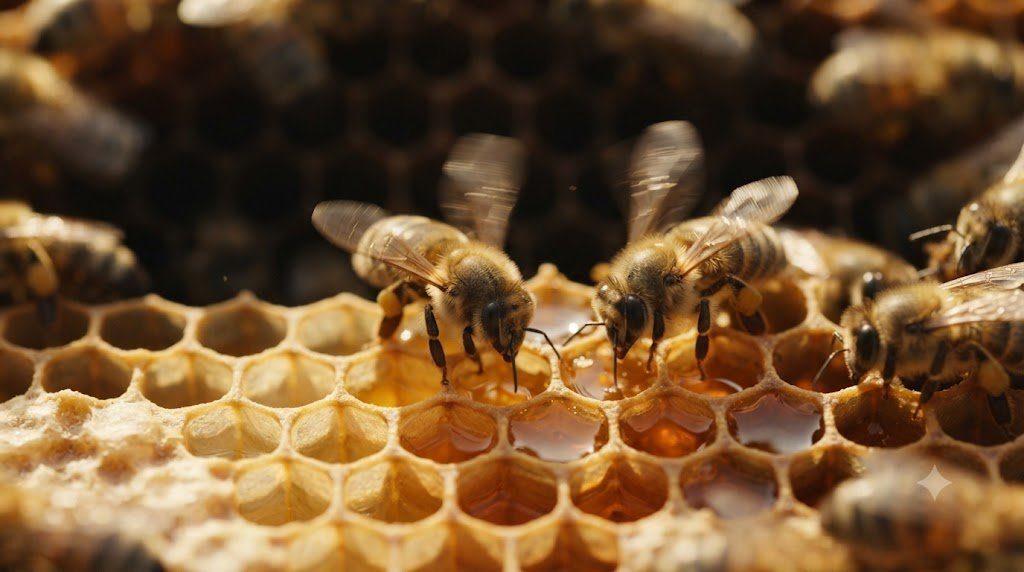
Nectar Inversion Biochemistry and Evaporative Ripening: Invertase, Glucose Oxidase, and Water Activity

Raw floral nectar collected by foraging honey bees is neither shelf-stable nor chemically equivalent to honey. Freshly secreted by plant floral or extrafloral nectaries, raw nectar is an aqueous solution containing 60% to 80% water and 20% to 40% dissolved sugars—predominantly the disaccharide sucrose ($C_{12}H_{22}O_{11}$), alongside variable trace fractions of glucose, fructose, amino acids (principally … Read more

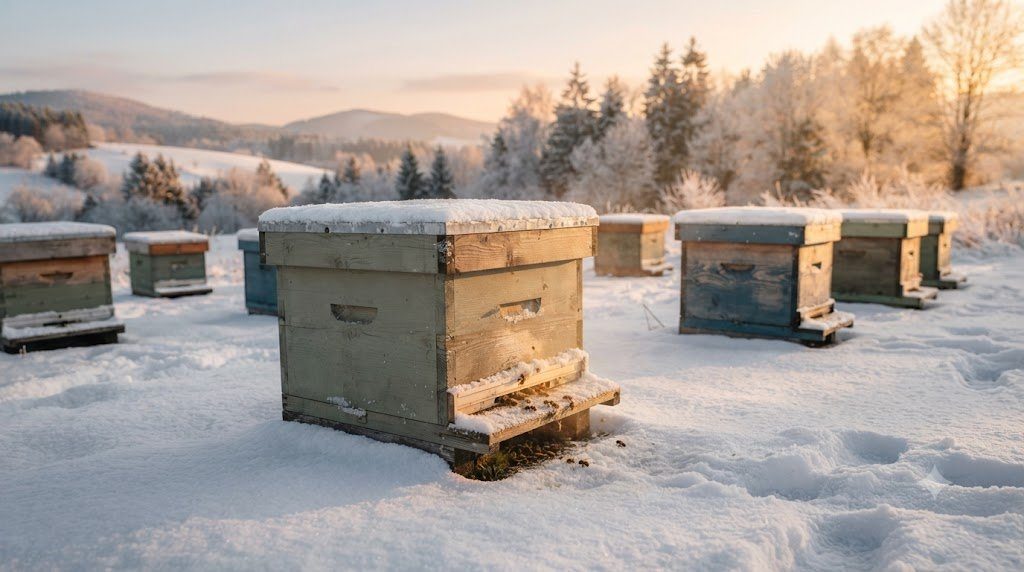
Overwintering Colony Thermodynamics and Condensation Physics: Insulated Condensers vs. Upper Ventilation

Every autumn across temperate and northern latitudes, beekeepers repeat the timeless adage: “Cold doesn’t kill honey bees—wetness kills honey bees.” While completely true—a dry cluster with ample honey stores can survive ambient temperatures plunging below -35°C (-31°F), whereas a cluster soaked to the skin by icy condensation water loses the insulating air pockets trapped in … Read more

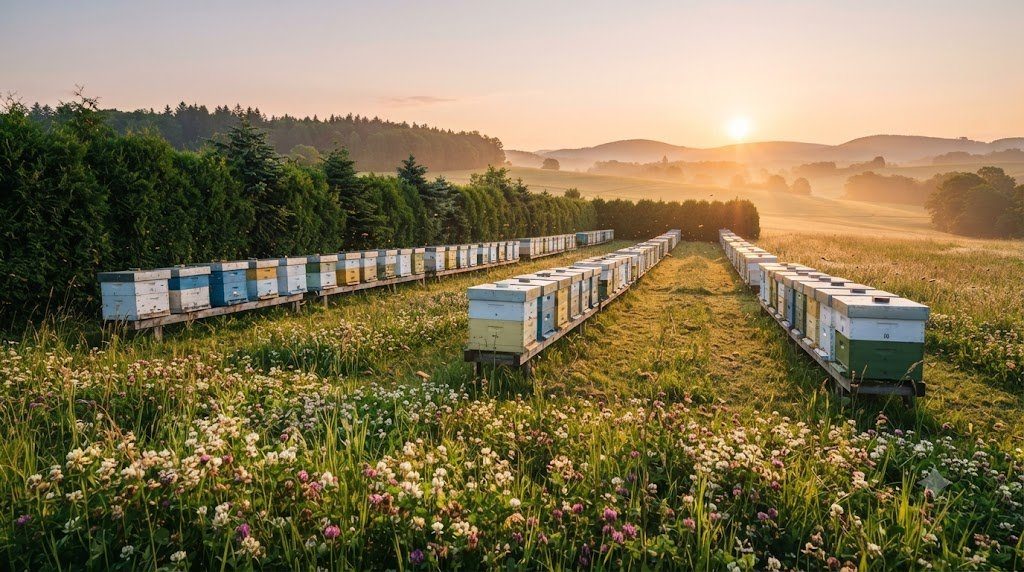
Apiary Site Selection and Microclimate Engineering: Solar Orientation, Windbreaks, and Drift Mitigation

Two genetically identical sister queens installed into identical Langstroth hives just 400 meters apart on the same farm can easily differ in surplus honey production by 50 pounds and experience completely opposite winter survival outcomes. The difference rarely lies inside the hive box—it lies in the microclimate of the apiary site. Microclimate engineering governs how … Read more

Horizontal Top-Bar and Warre Hive Engineering: Catenary Comb Curves and Natural Nest Thermoregulation

While the vertical frame-and-foundation Langstroth system dominates industrial pollination and migratory honey production, a growing movement of natural apiarists, biomechanical researchers, and treatment-minimalist beekeepers has returned to two time-tested foundationless architectures: the Horizontal Kenyan Top-Bar Hive (KTBH) and Abbé Émile Warré’s vertical People’s Hive (Ruche Populaire). Rather than forcing colonies to draw comb over stamped … Read more

Langstroth Hive Architecture and Bee Space Physics: 8-Frame vs. 10-Frame Ergonomics and Comb Configuration

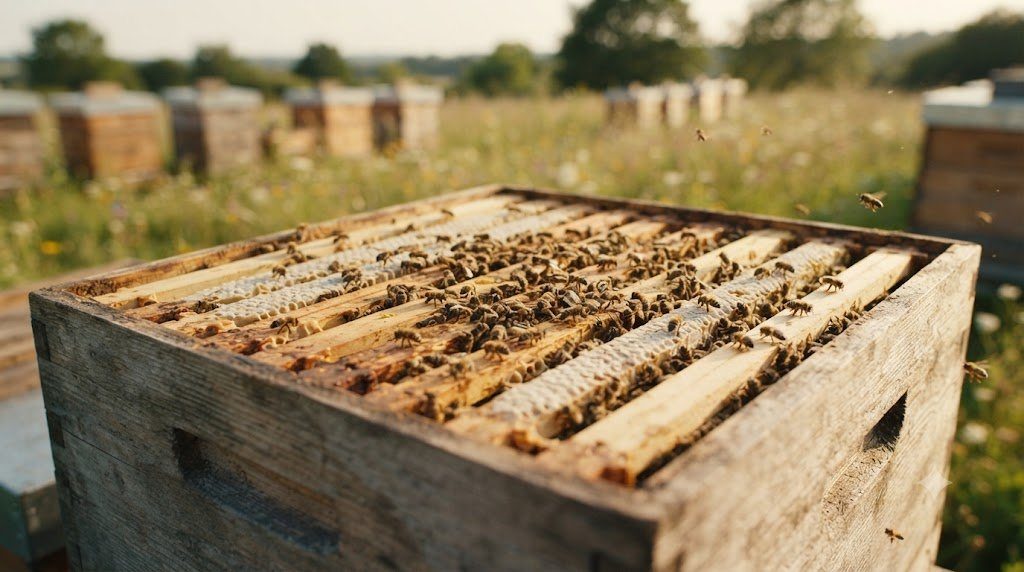
Prior to the autumn of 1851, inspecting a honey bee colony required either cutting comb out of fixed-bar boxes or destroying the colony inside woven straw skeps and hollow log gums with burning sulfur. When Reverend Lorenzo Lorraine Langstroth of Philadelphia realized that leaving a precise clearance gap between the top bars of movable wooden … Read more

Foraging Energetics and Waggle Dance Neuroethology: Nectar Flow Mapping and Colony Recruitment

Every pound of cured surplus honey stored inside a hive super represents the cumulative flight work of approximately 2 million individual floral visits and over 55,000 miles of collective wingbeat travel. Yet a honey bee colony does not send its 15,000 to 25,000 foragers out to wander randomly across the landscape. Instead, Apis mellifera operates … Read more

Queen Rearing Science and Grafting Mechanics: Doolittle Method, Cell Builders, and Mating Nuc Kinematics

At the heart of every productive, gentle, disease-resistant colony stands a high-capacity queen with richly developed ovaries and a fully inseminated spermatheca. While hobbyist beekeepers often rely on shipped commercial queens or simple emergency splits, mastering the science of controlled queen rearing transforms an apiarist from a passive consumer of bee stock into an independent … Read more

Swarm Biology and Reproductive Preventive Management: Demaree Method and Split Protocols

To the novice beekeeper, a honey bee swarm hanging from a high oak branch represents a sudden crisis and the loss of half the hive’s honey-gathering workforce. Biologically, however, reproductive swarming (colony fission) is the ultimate evolutionary triumph of the Apis mellifera superorganism. Whereas solitary insects reproduce simply by laying eggs, a honey bee colony … Read more

Apis mellifera Subspecies Genetics: Italian, Carniolan, Russian, and VSH Stock Comparison

Selecting the right genetic stock of Western honey bee (Apis mellifera) is one of the most consequential management decisions an apiarist makes. While all managed honey bee lines share the same fundamental anatomy, pheromone communication channels, and eusocial caste hierarchy, thousands of years of geographic isolation across Europe, Western Asia, and North Africa—followed by modern … Read more

About BeekeeperBase

About BeekeeperBase

BeekeeperBase is your authoritative apiculture resource dedicated to honey bee biology, Langstroth hive engineering, queen genetics, Varroa destructor integrated pest management, and artisanal honey extraction. We help backyard and commercial apiaries build resilient, high-yielding colonies.

Learn More →
Expert Advice Queen & Colony Biology
Apiary Management Varroa IPM Protocols
Extraction Engineering Seasonal Hive Care