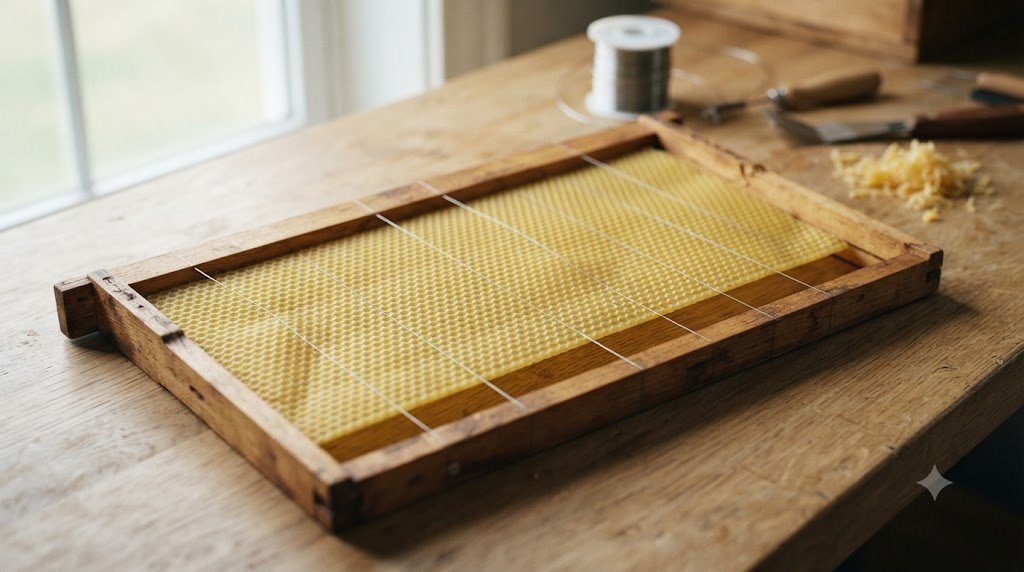
Bacterial and Microsporidian Pathology: American Foulbrood, European Foulbrood, and Nosema ceranae Diagnostics

Every time an apiarist lifts a brood frame out of the hive and scans the comb surface, they are acting as the frontline veterinary epidemiologist for their colony. A healthy brood nest displays a dense, contiguous mosaic of pearly-white, plump C-shaped larvae glistening in pools of royal jelly, surrounded by convex, uniform, golden-tan cappings with … Read more

Brood Metamorphosis and Larval Nutrition: Royal Jelly Epigenetics, Vitellogenin, and Winter Diutinus Bees

As a holometabolous insect (undergoing complete four-stage metamorphosis: Egg $\rightarrow$ Larva $\rightarrow$ Pupa $\rightarrow$ Adult Imago), the honey bee performs one of the fastest developmental growth sprints in the animal kingdom. Over just 6 days of open larval feeding, a newly hatched worker larva increases its body mass by an astonishing 1,500-fold—going from a 0.1-milligram … Read more

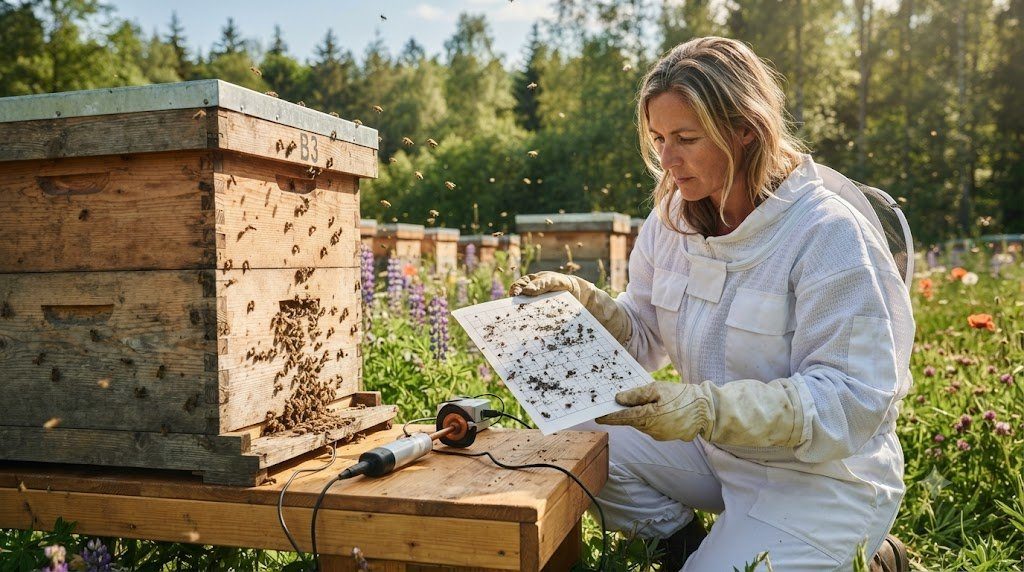
Varroa destructor Pathophysiology and Integrated Pest Management: Fat Body Depletion and Organic Acid Rotations

No biological threat in the history of modern apiculture rivals the destructive impact of the ectoparasitic mesostigmatid mite Varroa destructor. Originally an evolutionary parasite of the Eastern honey bee (Apis cerana) in Southeast Asia—where it reproduced exclusively in seasonal drone brood without killing host colonies—Varroa jumped species to the Western honey bee (Apis mellifera) in … Read more

Honey Bee Exocrine Gland Pheromones: 9-ODA Queen Mandibular, Nasonov, and Brood Recognition Chemistry

Inside the dark, bustling confines of a hive housing 50,000 sterile female workers, 500 drones, and a single reproductive queen, there is no central manager barking orders. Instead, social cohesion, reproductive monopoly, nursing allocation, orientation, and perimeter defense are orchestrated by a continuous symphony of volatile and non-volatile semiochemicals: honey bee pheromones. Secreted by at … Read more