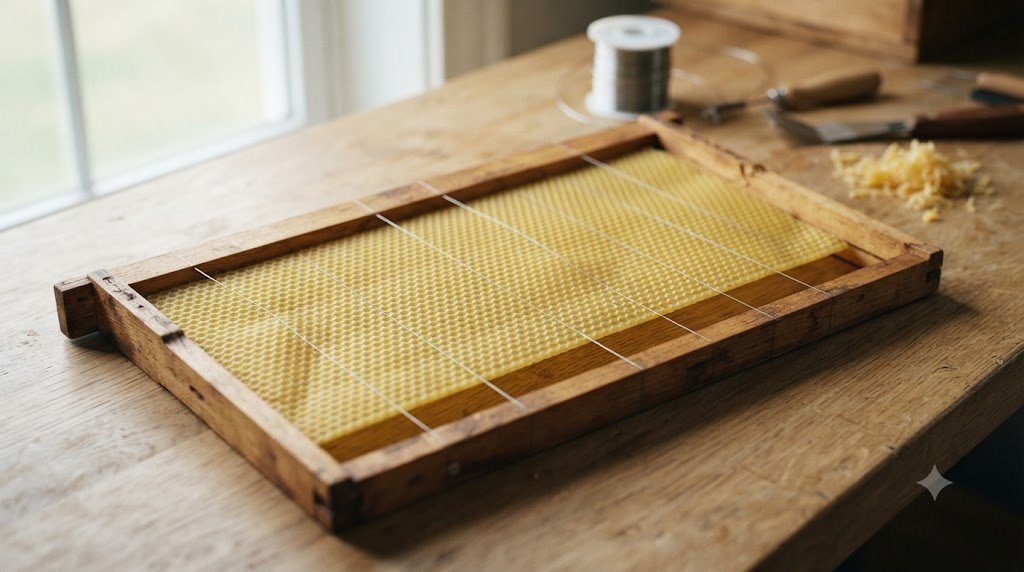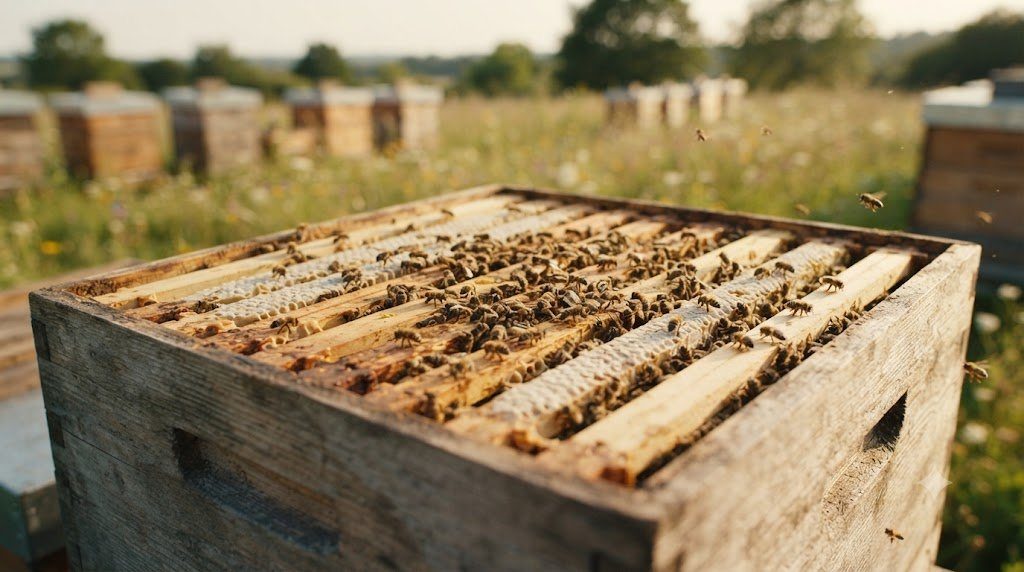
Prior to the autumn of 1851, inspecting a honey bee colony required either cutting comb out of fixed-bar boxes or destroying the colony inside woven straw skeps and hollow log gums with burning sulfur. When Reverend Lorenzo Lorraine Langstroth of Philadelphia realized that leaving a precise clearance gap between the top bars of movable wooden frames and the surrounding hive body prevented bees from cementing the frames with propolis or bridging them with wild burr comb, modern rational apiculture was born. That singular biological constant—Bee Space—transformed beekeeping from destructive honey hunting into a scientific agricultural discipline.
Today, the vertical modular Langstroth hive accounts for more than 85% of managed colonies across North America, Europe, and commercial pollination operations worldwide. Yet within the Langstroth standard, apiarists face critical engineering decisions: should you run traditional 10-frame equipment, transition to narrow 8-frame boxes, or standardize your entire yard on single-size medium (Illinois) hive bodies? In this detailed architectural guide, we examine the millimetric tolerances of bee space, box weights, brood nest thermal geometry, and frame spacing protocols.
The Physics and Biology of Bee Space (6.4 mm to 9.5 mm)
Inside a natural hollow tree cavity, honey bees obey strict architectural instincts dictated by the physical body dimensions of worker bees and their need to maintain microclimatic air channels while sealing out drafts and Wax Moth (Galleria mellonella) larvae. Langstroth discovered that honey bees respond to internal cavity gaps according to three non-negotiable dimensional zones:
- Gaps Smaller Than 6.4 mm (1/4 inch / < 4.5 mm): A worker bee cannot physically crawl through a crevice narrower than roughly 4.5 to 5.0 mm. Because unpassable crevices harbor small hive beetles (Aethina tumida) and wax moth larvae where guard bees cannot reach them, honey bees immediately seal any crack smaller than 6.0 mm solid with antimicrobial propolis (tree resins mixed with wax).
- True Bee Space: 6.4 mm to 9.5 mm (1/4 inch to 3/8 inch): Within this exact corridor—optimally engineered at 7.9 mm (5/16 inch) in modern precision-milled woodenware—two worker bees can walk back-to-back on opposing comb faces or hive walls without interference. The bees leave this passageway completely open as a permanent biological corridor.
- Gaps Larger Than 9.5 mm (> 3/8 inch): Whenever an internal void exceeds 9.5 mm—such as when a frame is missing, an inner cover has a deep rim turned the wrong way during a nectar flow, or poorly milled boxes leave a 14 mm vertical gap between top and bottom bars—wax-secreting festooning bees bridge the chasm with burr comb or brace comb, locking upper and lower boxes together.
Top-Bee-Space vs. Bottom-Bee-Space Woodenware
In standard North American Langstroth equipment, hive bodies are milled with Top Bee Space (or split 3/16-inch top + 1/8-inch bottom clearance): the top bars of the hanging Hoffman frames sit roughly 6.4 mm to 7.9 mm recessed below the upper rim of the box, while the bottom bars sit nearly flush (within 1.5–3.0 mm) with the bottom edge of the box. In contrast, British National hives rely on Bottom Bee Space. Understanding where your bee space sits is essential when flipping telescoping inner covers: turning the deep rim of an inner cover face-down during summer creates a 12 mm void that bees rapidly fill with honey-soaked burr comb.
Kiln-dried Eastern White Pine (Pinus strobus) expands and contracts radially across the grain by 1.5% to 2.5% as seasonal relative humidity shifts. Always verify that new 9-5/8 inch deep boxes measure at least 9-5/8 inches vertically; poorly seasoned lumber that shrinks to 9-3/8 inches crushes bee space between stacked boxes, causing bees to glue every bottom bar to the top bars below!
Dimensional & Ergonomic Matrix: 10-Frame vs. 8-Frame vs. All-Mediums
For over a century, the 10-frame Deep brood chamber combined with 10-frame Medium honey supers was considered the default hive setup. Over the past two decades, however, biomechanical back injuries and overwintering cluster studies have driven thousands of sideliner and hobbyist beekeepers toward 8-frame equipment or unified all-medium (8-frame or 10-frame) systems.
| Hive Box Specification | External Dimensions (L x W x H) | Comb Surface Area (Sq. In. Both Sides) | Full Weight (Filled with Capped Honey) | Primary Operational Advantage |
|---|---|---|---|---|
| 10-Frame Deep (Standard) | 19-7/8″ x 16-1/4″ x 9-5/8″ | ~2,350 sq. in. (approx. 68,000 cells) | 80 to 90 lbs (36–41 kg) | Maximum contiguous brood volume; industry standard for almond pallets |
| 8-Frame Deep | 19-7/8″ x 13-3/4″ x 9-5/8″ | ~1,880 sq. in. (approx. 54,400 cells) | 64 to 72 lbs (29–33 kg) | 20% lighter; narrower chimney matches natural tree-hollow cluster width |
| 10-Frame Medium (Illinois) | 19-7/8″ x 16-1/4″ x 6-5/8″ | ~1,520 sq. in. (approx. 44,000 cells) | 52 to 60 lbs (23–27 kg) | 100% frame interchangeability if used for both brood and honey supers |
| 8-Frame Medium | 19-7/8″ x 13-3/4″ x 6-5/8″ | ~1,215 sq. in. (approx. 35,200 cells) | 42 to 48 lbs (19–22 kg) | Most ergonomic box in apiculture; prevents lower-back lumbar strain |
| 10-Frame Shallow Super | 19-7/8″ x 16-1/4″ x 5-11/16″ | ~1,250 sq. in. (approx. 36,000 cells) | 38 to 44 lbs (17–20 kg) | Ideal for rapid cut-comb or Ross Round specialty honey production |
Why 8-Frame Hives Excel in Overwintering Chimney Physics
Beyond saving 15 to 20 pounds of deadlift weight per box, the 8-frame Langstroth setup offers a major biological advantage during cold continental winters. When ambient temperatures drop below 10°C (50°F), a honey bee colony forms a spherical thermoregulatory cluster roughly 25 to 30 cm (10 to 12 inches) in diameter. In a wide 10-frame hive (16.25 inches wide), a winter cluster moving vertically upward through its food stores frequently leaves the outermost 2 frames on the far left and right flanks untouched and freezing cold. In extreme sub-zero snaps, a cluster can starve to death inches away from full frames of honey on the outer walls because it cannot break cluster laterally across cold comb.
Because an 8-frame box is only 13.75 inches wide, the winter cluster spans nearly wall-to-wall across all 8 combs. As heat rises vertically in a narrow chimney, the cluster warms the entire box above it and migrates seamlessly straight up into its winter food reserves without stranding lateral stores.
The Case for Single-Size All-Medium Equipment
In a traditional mixed setup (Deep brood boxes + Medium honey supers), the apiarist is locked out of moving frames between the brood nest and the honey supers: a 9-1/8 inch deep frame cannot fit inside a 6-5/8 inch medium super, and placing a medium frame inside a deep box results in 3 inches of wild drone comb hanging off the bottom bar. By running three 10-frame Mediums (or four 8-frame Mediums) as the brood chamber and using identical Medium boxes for honey supers, every single frame in the apiary is 100% interchangeable. If a brood nest becomes honey-bound in spring, you simply lift a capped medium honey frame straight up into the honey super and drop an empty drawn medium comb into the brood nest.
Frame Spacing Geometry: 10 vs. 9 Frames in a 10-Frame Box
Standard Hoffman self-spacing sidebars measure 1-3/8 inches (35 mm) wide—the exact natural center-to-center comb spacing needed for rearing flat worker brood (where two opposing walls of capped pupae require 24 mm of comb thickness plus an 11 mm bee space corridor between faces). Therefore, in the brood chamber, you must always maintain full frame count (10 frames in a 10-frame box, or 8 frames in an 8-frame box) pushed tightly together in the center of the box so the bees do not build bridge comb or convert worker cells into deep drone cells.
In honey supers filled with already-drawn comb, however, commercial honey producers routinely practice 9-frame spacing in a 10-frame super (or 7 frames in an 8-frame super) using a notched frame-spacer tool. Widening the center-to-center spacing of drawn honey combs from 35 mm to 39 mm prompts receiver bees to draw out extra-deep storage cells (‘fat combs’) that project 4 to 5 mm past the wooden top and bottom bars. This offers three dramatic harvest advantages:
- Effortless Uncapping: A heated uncapping knife or vibrating flail glides straight across the wooden sidebars and slices off 100% of the wax cappings in a single pass, with zero sunken valleys requiring hand-scratching with an uncapping fork.
- Higher Honey-to-Wax Ratio: Nine fat frames hold slightly more total honey weight than ten standard frames while requiring 10% fewer frames to uncap and load into the extractor.
- Queen Deterrence Without an Excluder: Because queens cannot easily reach the bottom of extra-deep 18 mm storage cells with the tip of their abdomen to lay fertilized eggs, fat honey combs naturally discourage the queen from moving up into the supers.
Never place 9 frames of bare foundation (or foundationless frames) into a 10-frame super! Without existing drawn cell walls to guide them, bees given wide 39 mm spacing between bare foundation sheets will construct chaotic floating intermediate combs in the gap between frames. Always draw out new foundation at tight 10-frame spacing first, then reduce to 9 frames in year two.
Wood Preservation, Box Joint Carpentry, and Exterior Finishes
A Langstroth hive body is exposed to brutal hygroscopic stress: internal brood nest humidity hovers at 50% to 65% year-round while exterior walls endure baking UV radiation, driving rain, and freeze-thaw cycles. Finger-jointed (box-jointed) corners offer three times the glue surface area and mechanical shear resistance of simple rabbet joints, preventing corner separation when prying propolized supers apart with a steel hive tool. Fasten every finger pin with both waterproof PVA Type II/III wood glue and 7-gauge ring-shank galvanized nails or coated deck screws. Paint exclusively the exterior surfaces and bottom-edge rims with two coats of exterior acrylic latex primer and topcoat (or dip in hot microcrystalline paraffin/gum rosin at 150°C), leaving the interior wood completely raw and unpainted so the wood fibers can buffer excess moisture and accept the colony’s natural antimicrobial propolis lining.
Bottom Board Engineering: Screened (8-Mesh) vs. Solid Wooden Floors
At the base of every vertical Langstroth stack sits the bottom board—a component that profoundly influences internal airflow, early-spring brood nest warmth, and integrated pest management. Modern apiarists choose between two primary floor architectures:
- Solid Reversible Pine/Cedar Bottom Boards: The classic Langstroth design features a tongue-and-groove solid wood floor enclosed by side rails offering a 3/4-inch (19 mm) deep summer entrance on one side and a 3/8-inch (9.5 mm) shallow winter/spring entrance when flipped over. Solid floors preserve the colony’s ascending CO2 and pheromone stratification, stop cold updrafts in windy spring weather, and enable house bees to patrol the floor and eject wax moth frass out the front entrance.
- Screened Bottom Boards (#8 Galvanized/Stainless Hardware Cloth): Engineered with 1/8-inch (3.1 mm) wire mesh covering the floor above a slide-out corrugated plastic IPM inspection tray. Any phoretic Varroa mite knocked loose during grooming falls straight through the #8 mesh out of the hive (accounting for 5% to 12% passive mite reduction) and lands on the sticky inspection board for counting. However, leaving a screened bottom board completely open without the insert tray during cold early-spring brood rearing forces the colony to burn substantially more honey to heat the lower comb edges!
Slatted Racks: Eliminating Bottom-Bar Congestion and Swarming
Invented by C.C. Miller and refined by Carl Killion for comb-honey production, a Slatted Rack is a 2-inch deep wooden rim containing wooden slats spaced directly beneath each brood frame that sits between the bottom board and the lowest brood box. By creating a dark, draft-free 2-inch vestibule underneath the bottom bars, the slatted rack allows the queen to lay worker brood all the way down to the bottom bar (expanding usable brood area by 15%) and gives returning field bees an internal clustering space on hot summer nights instead of bearding outside the entrance.
Structural Maintenance, Carpentry Tolerances, and Seasonal Hive Audits
A well-engineered beehive is a precision thermodynamic vessel designed to serve a colony continuously for 15 to 25 years. Whether you operate 8-frame or 10-frame Langstroth stacks, horizontal Kenyan top-bar troughs, or insulated Warré towers, minor dimensional warping, rotting bottom-board runners, or unsealed roof seams rapidly compromise both bee space tolerances (7.9 mm) and winter moisture regulation.
Integrating an annual Carpentry & Microclimate Audit into your late-winter and late-summer apiary workflow ensures that hardware failures never trigger comb bridging, robbing breaches, or winter condensation losses. Review the structural inspection matrix below across all five hive zones.
| Hive Structural Zone | Critical Engineering Tolerance | Common Field Failure Mode | Corrective Maintenance & Upgrade |
|---|---|---|---|
| Hive Stand & Ground Base | 16–20 in. elevation; 1.5° forward tilt | Rotting timber runners; hive tips backward | Use concrete blocks + 4×4 pressure-treated rails; shim rear 1/4″ higher so rain drains out front |
| Bottom Board & Entrance | 9.5 mm winter / 19 mm summer opening | Warped pine floor creates rear robbing gap | Build floors from rot-resistant Western Red Cedar; install 1/4″ galvanized mouse guard in Oct |
| Brood Box Finger Joints | Square 90° corners; 7.9 mm top bee space | Corner separation when prying propolis | Glue all finger pins with Titebond III PVA + cross-nail with 7d ring-shank galvanized nails |
| Frame Rest Rabbets | 16 mm depth x 9.5 mm width (+ metal rail) | Propolized frame ears split wood rabbet | Install galvanized steel J-profile frame rest strips; coat contact edge with food-grade petrolatum |
| Telescoping Roof & Insulation | R-20+ ceiling; overhanging aluminum flashing | Pinhole leak wets inner cover & chills cluster | Fold seamless 0.019″ aluminum flashing over corners; insert 2″–4″ XPS foam board under lid |
Managing Robbing Defense Through Entrance Aperture Engineering
In nature, wild hollow tree nests studied by Dr. Thomas Seeley possess a small, single knot-hole entrance averaging just 12 to 20 square centimeters (roughly a 1.5-to-2-inch round hole)—which ten guard bees can defend effortlessly against wasps, yellowjackets (Vespula spp.), and neighboring robber bees. In contrast, a wide-open 10-frame Langstroth bottom board without an entrance reducer presents an enormous 300-square-centimeter (14.75 x 0.75 inch) undefended boulevard!
- When to Use the Smallest (1-Inch) Notch: Keep nuclear colonies, newly hived swarms, and spring packages restricted to the smallest 1-inch to 2-inch entrance opening until the box is 80% drawn, and immediately reduce all hives down to the medium or small opening the day the summer nectar flow stops in July/August.
- Installing Perforated Metal Robbing Screens: During severe late-summer nectar dearths or after pulling wet honey supers, attach a folded #8 hardware-cloth Robbing Screen across the front entrance. Resident bees know how to walk up and exit the top slot of the screen, whereas incoming robber bees—attracted by the plume of honey odor—slam repeatedly against the lower wire mesh face without finding the upper side entrance!
When heavy propolis builds up along the wooden frame-rest rabbets and Hoffman sidebar shoulders, prying a tight frame loose causes it to pop upward with a violent jolt—alarming guard bees and risking rolling the queen against the adjacent comb. Once each spring, scrape excess propolis lumps off the metal frame rests with your flat hive tool blade and rub a tiny smear of pure beeswax or food-grade mineral oil along the metal rail so frames slide like silk!
Frequently Asked Questions: Hive Architecture, Insulation, and Siting
Can I move a beehive 20 feet across my backyard in the middle of summer?
Every apiarist must obey the “Under 3 Feet or Over 3 Miles Rule”! Foraging honey bees lock the exact GPS-like visual landmark coordinates of their hive entrance into their long-term mushroom-body memory. If you pick up a hive at night in July and move it 25 feet across the yard, the next morning 15,000 field bees will fly out, return to the exact spot where the hive used to sit, and hover helplessly on the empty grass until they die of exhaustion! To move a hive a short distance within the same yard, either slide the hive 2 to 3 feet per day over several days, OR move the hive to a temporary out-yard at least 3 miles (5 km) away for 14 days before bringing it back to the new spot, OR stack a dense bundle of leafy evergreen branches directly across the front entrance so exiting bees notice the obstruction and execute a full orientation flight.
Should I use a Queen Excluder below my honey supers?
A precision welded round-wire metal Queen Excluder (spaced at exactly 4.14 mm to 4.20 mm / 0.163 inches—large enough for worker thoraxes measuring 3.8–4.0 mm to pass through while blocking the larger 4.4–4.6 mm thorax of the mated queen and 5.2 mm drones) guarantees 100% brood-free honey supers at harvest. However, bees frequently treat a bare foundation super placed above an excluder as a ceiling barrier (‘honey excluder’). The professional trick is to omit the excluder for the first 7 days while bees draw out new comb or put 1 drawn comb frame in the center of the super as a ‘ladder’ above the excluder to draw nurse and receiver bees upstairs immediately.
Is cedar worth the higher cost over Eastern White Pine for hive boxes?
Western Red Cedar (Thuja plicata) is naturally rich in antifungal thujaplicin heartwood oils, weighs roughly 15% less than pine when dry, and resists rot for 20+ years even without paint—making it unmatched for bottom boards,hive stands, and Warré moisture quilts. For standard brood boxes and supers, well-painted kiln-dried Eastern White Pine offers superior nail-holding strength at half the cost.