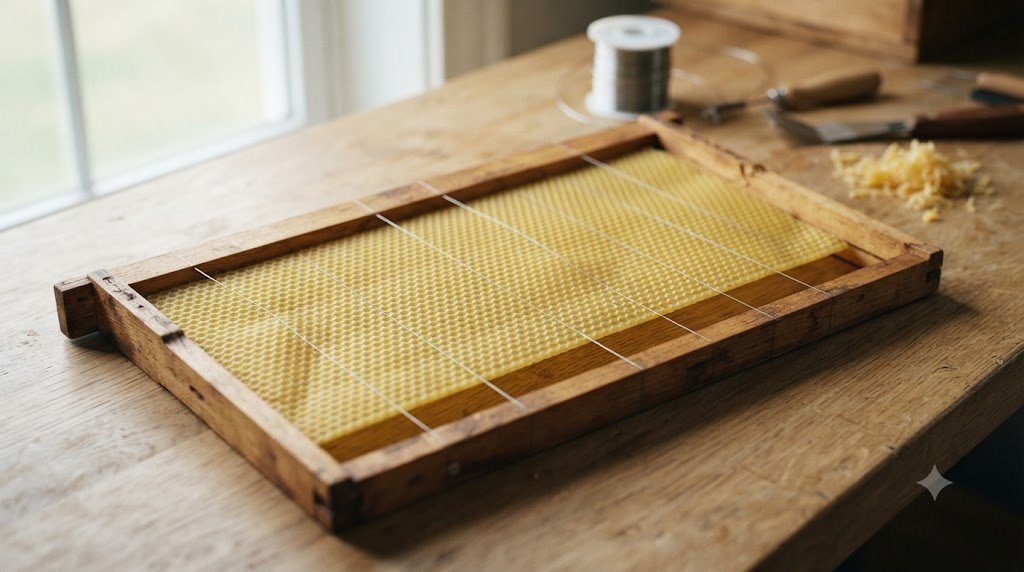
While the vertical frame-and-foundation Langstroth system dominates industrial pollination and migratory honey production, a growing movement of natural apiarists, biomechanical researchers, and treatment-minimalist beekeepers has returned to two time-tested foundationless architectures: the Horizontal Kenyan Top-Bar Hive (KTBH) and Abbé Émile Warré’s vertical People’s Hive (Ruche Populaire). Rather than forcing colonies to draw comb over stamped plastic or milled beeswax sheets inside four-sided wooden frames, both systems allow bees to hang 100% natural, self-supported wax combs from simple wooden top bars—mimicking the structural physics and unbroken thermal envelope of a wild hollow tree cavity.
Operating a top-bar or Warré hive successfully requires a very different mechanical skillset than inspecting a Langstroth hive. Because natural comb lacks bottom bars, sidebars, and internal stainless steel reinforcement wires, misunderstanding the physics of wax tensile strength, angled side walls, or comb rotation will quickly result in catastrophic comb collapse. Here is the complete engineering and management guide to horizontal top-bar and Warré apiculture.
Structural Mechanics of Natural Catenary Comb and Sloped Side Walls
When a honey bee swarm settles inside a hollow oak trunk or beneath a Horizontal Top-Bar ceiling, wax-secreting worker bees link their tarsal claws together in hanging chains (festoons). Using gravity as a plumb line, they construct natural comb whose outer lower perimeter follows an inverted catenary curve (hyperbolic cosine curve)—the exact same self-supporting architectural arch used by Antoni Gaudí and Gothic cathedral builders to distribute gravitational tension evenly without internal bending moments.
In a Kenyan Top-Bar Hive (KTBH), the long trough body is built with inward-sloping side walls angled at 120 degrees to the horizontal top bars (30 degrees off vertical). This specific geometry is no accident: because natural catenary comb tapers inward toward the bottom and bees naturally leave a 7.5 mm bee space along the lower two-thirds of a 30-degree sloped wall, the colony attaches its comb exclusively to the movable wooden top bar above while leaving the sloped side walls completely unattached (or minimally bridged).
Top-Bar Width Precision: Worker Brood (32–35 mm) vs. Honey Storage (38 mm)
In a foundationless top-bar hive, the width of each individual wooden bar dictates the center-to-center comb spacing of the nest. If bars are cut randomly, bees will weave sinuous S-shaped combs across multiple bars (‘cross-combing’). For the brood nest, top bars must be ripped on a table saw to a strict width of 32 mm to 35 mm (1-1/4 inch to 1-3/8 inch). For the honey storage end of the trough, many builders cut wider 38 mm (1-1/2 inch) bars or insert 3 mm spacer shims between standard bars so the bees construct deep honey combs while keeping the brood nest compact.
NEVER tilt a horizontal top-bar comb flat like a cafeteria tray to look at the brood! Newly drawn beeswax inside a 35°C hive is warm and thermoplastic; tilting an un-wired 12-inch comb filled with 6 pounds of brood and nectar horizontally creates massive cantilever torque along the top bar joint, snapping the entire comb onto the ground. Always keep the top bar horizontal—or rotate the bar vertically in the plane of the comb like turning the page of a standing wheel!
Architectural Comparison: Langstroth vs. Kenyan Top-Bar vs. Warré Hive
Every hive architecture represents an engineering trade-off between lifting ergonomics, honey extraction equipment requirements, and thermal nest integrity. The comparison table below details the core specifications of the three major systems.
| Architectural Parameter | Vertical Langstroth Hive | Horizontal Kenyan Top-Bar (KTBH) | Warré ‘People’s Hive’ (Vertical) |
|---|---|---|---|
| Expansion Vector | Vertical (Supers added on top) | Horizontal (Follower board slid outward) | Vertical Downward (‘Nadiring’ boxes below) |
| Comb Support Structure | 4-sided wooden frame + wired/plastic foundation | Single V-keel or starter-strip top bar (No frame) | 8 top bars per 300x300mm box (Foundationless) |
| Heaviest Single Lift | 50 to 90 lbs (Full honey super/deep) | 6 to 9 lbs (One individual comb bar!) | 35 to 45 lbs (When lifting stack to nadir) |
| Top Cover Design | Solid wooden inner cover + telescoping lid | Solid wooden bars form a sealed plank ceiling | Vapour-permeable quilt box filled with wood shavings |
| Honey Harvest Method | Centrifugal extractor (Reusable drawn comb) | Crush-and-strain or cut-comb (Wax harvested) | Crush-and-strain or gravitational draining |
| Brood Nest Thermal Loss | High when top lid removed (Chimney heat escapes) | Very Low (Only 1–2 bars opened at a time) | Extremely Low (Quilt + nadiring preserves top heat) |
Comb Guide Engineering: V-Keels, Kerf Starters, and Preventing Cross-Comb
The single greatest frustration for beginning top-bar and Warré beekeepers is opening a hive 14 days after hiving a package or swarm only to discover the bees have ignored the wooden bars and built seven combs diagonally across the trough. Honey bees orient comb parallel to the sharp physical ridge of greatest gravitational prominence. To guarantee 100% straight, single-bar combs, execute three preparatory steps:
- Install a Sharp 45-Degree Triangular Wood Keel or Wax Starter Strip: Glue and brad-nail a triangular wedge moulding (or rip a 1/4-inch kerf groove holding a 15 mm strip of pure beeswax foundation or craft popsicle-stick spline) down the exact centerline of each bar. Coat this keel generously with melted pure cappings beeswax using a pastry brush.
- Level the Hive Stand Side-to-Side with a Spirit Level: Because festooning bees hang straight down toward the center of the Earth, if your top-bar hive leans even 3 degrees to the left or right, the hanging curtain of bees will drift off the centerline of the V-keel and attach the bottom of the comb to the adjacent bar! The hive must be dead-level side-to-side (though a slight 1–2 degree tilt down toward the front entrance along the long axis is acceptable for rain drainage).
- Confine the Swarm with the Follower Board: Never give a newly installed swarm access to all 28 bars of a 4-foot horizontal trough at once. Place only 8 to 10 bars next to the entrance, close off the rest of the cavity with a tight-fitting solid wooden follower board, and add only 1 or 2 new empty bars directly between the last brood comb and the first pollen/honey comb as the colony expands.
Abbé Émile Warré’s ‘People’s Hive’: Quilt Box Hygro-Regulation and Nadiring
After testing 350 colonies across twelve different frame hive designs in France during the early 20th century, Abbé Émile Warré concluded that opening the top of a hive during inspections and placing oversized cold boxes on top of the brood nest violated the natural physics of a hollow tree. His solution—the Warré hive—consists of compact, square 300 mm x 300 mm x 210 mm internal boxes, each fitted with 8 foundationless top bars coated with wax starter strips.
The Moisture Quilt and Top Cloth: Mimicking Decaying Tree Wood
In a hollow tree, the ceiling above the honey bee nest is composed of decaying punky heartwood (rotten wood colonized by fungal mycelia) that absorbs metabolic water vapor without letting rising convective heat escape. Warré replicated this above his top box using two components: first, a coarse woven canvas top cloth stiffened with flour paste and propolis by the bees; second, a 100 mm deep wooden quilt box with a burlap underside filled with cedar or pine planer shavings, wood chips, or dried straw, topped by a ventilated gabled roof. Warm moisture-laden air from the winter cluster diffuses slowly through the quilt shavings and exits under the roof eaves, completely preventing lethal freezing condensation droplets from raining back down onto the cluster.
Nadiring vs. Supering: Expanding Downward Like a Wild Colony
In a wild hollow tree, a swarm attaches its first combs to the top ceiling of the cavity and expands progressively downward over the season—storing winter honey at the top and pushing the brood nest down toward the oxygen-rich entrance as upper cells are backfilled with honey. When a Langstroth beekeeper places an empty cold super on top of the hive in early spring, rising warm air rushes out of the brood nest into the empty attic, chilling the upper brood margins until the bees burn excess honey to heat the new space. In the Warré system, new empty boxes are added underneath the existing boxes on the bottom board—a technique called nadiring. The warm thermal dome at the top of the hive is never broken, and the colony simply extends its brood combs downward into the lower box as population and nectar flows dictate.
Because nadiring requires lifting two or three full Warré boxes off the bottom board to slide an empty box underneath, many modern Warré apiarists build a simple lightweight A-frame rope pulley or two-wheeled lever lift (the ‘Warré Easy-Lift’), allowing a single operator to raise a 100-pound hive tower effortlessly with one hand.
Spring Comb Rotation and Crush-and-Strain Harvesting in Foundationless Hives
Because foundationless combs are harvested by slicing the comb from the wooden bar, crushing the wax cells inside a food-grade stainless bucket, and straining the liquid honey through 600-micron and 200-micron nylon mesh filters, foundationless beekeeping inherently enforces continuous comb renewal. Dark, multi-year brood combs that have accumulated lipophilic agricultural miticide residues, heavy coccoon linings, and bacterial spores are systematically cycled toward the harvest end of the trough, filled with honey once the brood emerges, and harvested for both raw floral honey and high-value pure beeswax—leaving the colony on pristine, disease-free new wax every two to three seasons.
Designing Observation Windows and Follower Boards for Horizontal Hives
One of the most rewarding engineering features of a Kenyan Top-Bar Hive (KTBH) or horizontal Layens/Long-Langstroth trough is the ability to integrate a full-length double-paned acrylic or tempered glass observation window into one of the sloped long sidewalls, covered by a hinged insulated wooden shutter door.
Without puffing a single cloud of smoke, breaking a single propolis seal, or chilling the brood nest by lifting a bar, the apiarist can unlatch the exterior wooden shutter at any time of year and immediately determine:
- Exact Colony Expansion & Comb Building Progress: You can see which bar currently holds the outermost festoon of wax-building bees, knowing instantly when to slide the follower board back and insert two empty starter bars.
- Winter Cluster Position and Food Stores: In January or February, peaking through the window for 5 seconds reveals where the winter cluster sits relative to remaining honey bars without letting warm air escape the ceiling.
- Pollen Foraging Intensity & Swarm Readiness: Watching the density of bee curtains hanging below the combs and checking the lower catenary edges for peanut-shaped swarm cells right through the glass cuts invasive open-hive inspections by 70%.
Constructing a Zero-Gap Gasketed Follower Board
In a horizontal top-bar hive, the movable follower board (division board) serves as the adjustable rear wall of the nest cavity. If your follower board fits loosely with a 10 mm gap along the sloped sides, scout bees will sneak behind the board into the empty half of the trough and build wild cross-comb attached to the ceiling! Cut the follower board to leave a 3 mm woodworking clearance around the perimeter and staple a loop of flexible closed-cell EPDM foam weatherstripping or burlap roll around its angled edges so it slides smoothly while maintaining a 100% bee-tight seal.
Structural Maintenance, Carpentry Tolerances, and Seasonal Hive Audits
A well-engineered beehive is a precision thermodynamic vessel designed to serve a colony continuously for 15 to 25 years. Whether you operate 8-frame or 10-frame Langstroth stacks, horizontal Kenyan top-bar troughs, or insulated Warré towers, minor dimensional warping, rotting bottom-board runners, or unsealed roof seams rapidly compromise both bee space tolerances (7.9 mm) and winter moisture regulation.
Integrating an annual Carpentry & Microclimate Audit into your late-winter and late-summer apiary workflow ensures that hardware failures never trigger comb bridging, robbing breaches, or winter condensation losses. Review the structural inspection matrix below across all five hive zones.
| Hive Structural Zone | Critical Engineering Tolerance | Common Field Failure Mode | Corrective Maintenance & Upgrade |
|---|---|---|---|
| Hive Stand & Ground Base | 16–20 in. elevation; 1.5° forward tilt | Rotting timber runners; hive tips backward | Use concrete blocks + 4×4 pressure-treated rails; shim rear 1/4″ higher so rain drains out front |
| Bottom Board & Entrance | 9.5 mm winter / 19 mm summer opening | Warped pine floor creates rear robbing gap | Build floors from rot-resistant Western Red Cedar; install 1/4″ galvanized mouse guard in Oct |
| Brood Box Finger Joints | Square 90° corners; 7.9 mm top bee space | Corner separation when prying propolis | Glue all finger pins with Titebond III PVA + cross-nail with 7d ring-shank galvanized nails |
| Frame Rest Rabbets | 16 mm depth x 9.5 mm width (+ metal rail) | Propolized frame ears split wood rabbet | Install galvanized steel J-profile frame rest strips; coat contact edge with food-grade petrolatum |
| Telescoping Roof & Insulation | R-20+ ceiling; overhanging aluminum flashing | Pinhole leak wets inner cover & chills cluster | Fold seamless 0.019″ aluminum flashing over corners; insert 2″–4″ XPS foam board under lid |
Managing Robbing Defense Through Entrance Aperture Engineering
In nature, wild hollow tree nests studied by Dr. Thomas Seeley possess a small, single knot-hole entrance averaging just 12 to 20 square centimeters (roughly a 1.5-to-2-inch round hole)—which ten guard bees can defend effortlessly against wasps, yellowjackets (Vespula spp.), and neighboring robber bees. In contrast, a wide-open 10-frame Langstroth bottom board without an entrance reducer presents an enormous 300-square-centimeter (14.75 x 0.75 inch) undefended boulevard!
- When to Use the Smallest (1-Inch) Notch: Keep nuclear colonies, newly hived swarms, and spring packages restricted to the smallest 1-inch to 2-inch entrance opening until the box is 80% drawn, and immediately reduce all hives down to the medium or small opening the day the summer nectar flow stops in July/August.
- Installing Perforated Metal Robbing Screens: During severe late-summer nectar dearths or after pulling wet honey supers, attach a folded #8 hardware-cloth Robbing Screen across the front entrance. Resident bees know how to walk up and exit the top slot of the screen, whereas incoming robber bees—attracted by the plume of honey odor—slam repeatedly against the lower wire mesh face without finding the upper side entrance!
When heavy propolis builds up along the wooden frame-rest rabbets and Hoffman sidebar shoulders, prying a tight frame loose causes it to pop upward with a violent jolt—alarming guard bees and risking rolling the queen against the adjacent comb. Once each spring, scrape excess propolis lumps off the metal frame rests with your flat hive tool blade and rub a tiny smear of pure beeswax or food-grade mineral oil along the metal rail so frames slide like silk!
Frequently Asked Questions: Hive Architecture, Insulation, and Siting
Can I move a beehive 20 feet across my backyard in the middle of summer?
Every apiarist must obey the “Under 3 Feet or Over 3 Miles Rule”! Foraging honey bees lock the exact GPS-like visual landmark coordinates of their hive entrance into their long-term mushroom-body memory. If you pick up a hive at night in July and move it 25 feet across the yard, the next morning 15,000 field bees will fly out, return to the exact spot where the hive used to sit, and hover helplessly on the empty grass until they die of exhaustion! To move a hive a short distance within the same yard, either slide the hive 2 to 3 feet per day over several days, OR move the hive to a temporary out-yard at least 3 miles (5 km) away for 14 days before bringing it back to the new spot, OR stack a dense bundle of leafy evergreen branches directly across the front entrance so exiting bees notice the obstruction and execute a full orientation flight.
Should I use a Queen Excluder below my honey supers?
A precision welded round-wire metal Queen Excluder (spaced at exactly 4.14 mm to 4.20 mm / 0.163 inches—large enough for worker thoraxes measuring 3.8–4.0 mm to pass through while blocking the larger 4.4–4.6 mm thorax of the mated queen and 5.2 mm drones) guarantees 100% brood-free honey supers at harvest. However, bees frequently treat a bare foundation super placed above an excluder as a ceiling barrier (‘honey excluder’). The professional trick is to omit the excluder for the first 7 days while bees draw out new comb or put 1 drawn comb frame in the center of the super as a ‘ladder’ above the excluder to draw nurse and receiver bees upstairs immediately.
Is cedar worth the higher cost over Eastern White Pine for hive boxes?
Western Red Cedar (Thuja plicata) is naturally rich in antifungal thujaplicin heartwood oils, weighs roughly 15% less than pine when dry, and resists rot for 20+ years even without paint—making it unmatched for bottom boards,hive stands, and Warré moisture quilts. For standard brood boxes and supers, well-painted kiln-dried Eastern White Pine offers superior nail-holding strength at half the cost.