Confidence at the open hive is directly proportional to the engineering quality of your protective equipment. When a beekeeper is sweltering inside a heavy, non-breathing cotton canvas suit in 34°C (93°F) July heat—with sweat dripping into their eyes, veil mesh sagging against the tip of their nose, and clumsy, propolis-encrusted leather gauntlets crushing bees between frame lugs—every movement becomes rushed, jerky, and defensive. Honey bees immediately detect mammalian carbon dioxide exhalations, human sweat lactic acid/octenol volatiles, and rapid physical vibrations, escalating guard bee response.
Over the past fifteen years, materials science has revolutionized apicultural personal protective equipment (PPE). By replacing suffocating single-layer woven drill cotton with 3D triple-layer ventilated spacer mesh calibrated to exceed the anatomical penetration depth of the Apis mellifera sting lancet, modern suits allow cooling winds to blow straight across the operator’s skin while delivering near-100% sting immunity. Here is the complete mechanical and ergonomic guide to choosing, fitting, and maintaining suits, veils, and gloves.
Sting Lancet Biomechanics vs. 4.0 mm Triple-Layer Spacer Mesh
To understand why a single-layer cotton shirt or tight denim jeans fail to stop a honey bee sting when stretched over a bent knee or shoulder, examine the anatomy of the worker bee sting apparatus. The barbed stylet and paired reciprocating lancets of an adult Apis mellifera worker measure approximately 1.5 mm to 2.2 mm in functional extension length (up to 2.5 mm when a defensive bee forces her abdominal tip down into fabric weave). Standard single-layer 280 gsm cotton twill measures only 0.6 mm to 0.9 mm thick! It only prevents stings where the fabric hangs loose and baggy away from the skin; the instant you bend your elbow or kneel and the wet, sweaty cotton touches your epidermis, a bee landing on that tight spot can drive her lancet straight through the weave into your skin.
Triple-Layer Ventilated Mesh (Air-Mesh) solves this problem via pure geometric thickness rather than fabric density:
- Inner & Outer Open-Hexagon Polycotton/Polyester Knits: Two tough, snag-resistant hexagonal mesh sheets form the inner skin-contact layer and the outer bee-contact surface.
- Central Monofilament EVA/Polyester Spacer Core: Sandwiched vertically between the two outer nets is a springy, semi-rigid lattice of vertical polymer monofilaments holding the inner and outer layers strictly 4.0 mm to 4.5 mm apart.
- Zero Skin Reach + Convective Cooling: Because 4.2 mm is roughly double the maximum reach of a worker bee’s stinger—and the rigid monofilament core refuses to collapse even across bent elbows, shoulders, or knees—a bee attempting to sting a ventilated suit stabs harmlessly into mid-air inside the spacer gap while breeze flows freely through the open hexagons!
Never wear dark navy, black, dark brown, or fuzzy wool clothing around beehives! For millions of years across Eurasia and Africa, the primary mammalian predators raiding honey bee nests were black/brown bears, honey badgers (ratels), and skunks. Consequently, honey bees possess a hardwired evolutionary reflex to attack dark, furry, rough-textured objects—especially near the head and eyes—while largely ignoring smooth, bright white or light tan surfaces.
Engineering Comparison of Apicultural Suit Fabrics & Glove Materials
Compare the thermal breathability, sting-penetration resistance, weight, and dexterity trade-offs across the major suit and glove technologies in the engineering matrix below.
| PPE Component & Material | Wall Thickness | Sting Protection Rating | Thermal Breathability | Tactile Dexterity / Visibility | Best Apiary Use Case |
|---|---|---|---|---|---|
| 3-Layer Ventilated Polycotton Mesh | 4.0 to 4.5 mm | 99.5% (Exceeds lancet reach) | Maximum (Open wind flow) | Light & flexible (3.2–4.0 lbs) | Hot summer yards, heavy lifting, commercial/sideliner |
| Heavy Woven Cotton Twill (280+ gsm) | 0.7 to 1.0 mm | High when loose; fails if tight | Low (Traps body heat & sweat) | Heavy; stiffens after washing | Cool spring/autumn inspections or windy northern yards |
| Ripstop Poly-Cotton Blend (Single) | 0.5 to 0.7 mm | Moderate (Requires under-layer) | Moderate | Very lightweight packable jacket | Quick feeder refills or calm Carniolan yards |
| 7–8 mil Nitrile Gloves (Double-layered) | 0.2 to 0.4 mm | Moderate (Bees rarely sting nitrile) | Low (Hands sweat inside) | 100% Frame feel; zero crushed bees; washable | Queen rearing, grafting, routine gentle inspections |
| Goatskin Leather Gauntlets | 1.2 to 1.6 mm | High (Watch wrist stitch seams) | Low; absorbs propolis/alarm scent | Good (Much softer than cowhide) | General hive inspections and harvesting supers |
| Ventilated Cowhide Leather Gloves | 1.8 to 2.2 mm | Maximum (Virtually sting-proof) | Moderate (Mesh wrist cuff) | Clumsy (Hard to feel queen or frame lugs) | Cut-outs, defensive/feral colonies, shaking swarms |
Veil Geometry and Optical Physics: Why Black Fiberglass Mesh Is Essential
Why is the body of every beekeeping suit snow-white, yet the facial veil mesh is universally jet-black? Because of optical glare reflection! If a veil screen is woven from white nylon threads, sunlight striking the white threads scatters brightly into your pupils, creating a milky white haze that makes it virtually impossible to spot translucent 0.1-milligram eggs at the bottom of dark brood cells. A charcoal-black fiberglass or high-tensile polyester screen absorbs incoming photons without glare, becoming optically invisible to the human eye looking outward while shading the face.
Fencing Veil vs. Round Hat Veil vs. Square Folding Sheriff Veil
Each veil architecture offers distinct ergonomic advantages:
- Round Brim Veil (360° Sombrero Style): Provides full 360-degree vision and keeps the mesh farthest away from the back of the neck and ears, Plus the wide canvas crown shades the head in direct sun. However, the wide circular brim can bump into low tree branches or second-story hive stacks when peering closely at a frame.
- Fencing Veil (Hood Style with Internal Support): Zips back effortlessly like a hoodie so you can drive between out-yards without removing your jacket, and offers a narrow profile when bending between close hives. Look exclusively for fencing veils equipped with dual rigid internal fiberglass stays so a gust of wind can never blow the front mesh flat against your nose or chin!
The Case for 8-Mil Nitrile Exam Gloves Over Heavy Leather Gauntlets
New beekeepers almost universally buy thick cowhide leather gloves—and quickly discover a frustrating paradox: thick leather gloves actually cause more stings! Because clumsy 2 mm cowhide dulls your fingertip proprioception, you inadvertently roll and crush worker bees under the frame ears every time you lift a comb. Each crushed bee releases Koschevnikov alarm pheromone (isoamyl acetate), which soaks permanently into the porous leather fibers. The next week you open a hive wearing those same unwashed leather gloves, guard bees smell last week’s alarm pheromone and immediately attack your hands!
Switching to 7-mil or 8-mil long-cuff disposable Nitrile gloves (preferably light blue, green, or white—or wearing a thin cotton liner glove underneath an 8-mil nitrile outer glove) transforms your beekeeping: you can feel every single bee under your fingertips so zero bees are crushed, honey Bees rarely recognize smooth synthetic nitrile as biological skin, propolis wipes right off with rubbing alcohol, and zero alarm pheromone carries over from one hive to the next.
Washing Protocols: Removing Isoamyl Acetate Without Destroying Veil Mesh
Whenever your suit or gloves receive stings, wash them before your next apiary visit—or mist the sting spot immediately with cool smoke or rubbing alcohol. Always unzip and detach the veil hood before putting the suit in a washing machine: machine agitators and tumble dryers crease and fracture rigid black veil fiberglass mesh, creating permanent blind spots or bee entry holes. Hand-wash the veil gently in a utility sink with lukewarm water and unscented detergent (never use floral or banana/fruity fabric softeners!), and hang the suit and veil in the shade to air-dry.
Managing Anaphylaxis, Normal Large Local Reactions, and Epinephrine Readiness
Anyone who works with stinging Hymenoptera will eventually receive stings—whether through an unzipped veil gap, an ankle sock, or while catching a swarm barehanded. Every responsible apiarist must know the exact clinical distinction between a Normal Large Local Reaction (LLR), a Cutaneous Generalized Reaction, and a life-threatening Systemic Anaphylactic Emergency:
- Normal & Large Local Reactions (Non-Allergic Histamine/Melittin Inflammation): Honey bee venom contains roughly 50% melittin (a cell-membrane-lysing peptide that causes immediate sharp burning pain), phospholipase A2 (the primary allergen enzyme), hyaluronidase, and histamine. It is 100% normal for a sting on the hand or forearm to swell progressively over 24 to 48 hours into a warm, tight, itchy red edema spanning 10 to 20 cm (an LLR), peaking at 48 hours and resolving over 5 to 7 days. Cold compresses, elevation, topical hydrocortisone, and oral non-drowsy antihistamines (cetirizine or fexofenadine) manage localized swelling effectively.
- Systemic Anaphylaxis (Immediate IgE-Mediated Medical Emergency): Occurs within 2 to 30 minutes of a sting when IgE antibodies trigger massive systemic mast-cell degranulation far away from the sting site. Warning signs include: generalized hives (urticaria) erupting across the chest/neck, flushing, swelling of the tongue/lips/throat (angioedema), wheezing or shortness of breath, dizziness/hypotension, and metallic taste or abdominal cramping.
Immediate Stinger Scraping and Apiary First-Aid Kit Contents
Because the autotomized worker sting apparatus continues pumping its muscular venom bulb for 45 to 60 seconds after detaching from the bee, scrape the stinger out within 2 seconds using the edge of your hive tool or fingernail (never waste 30 seconds looking for tweezers; rapid removal matters far more than whether you scrape or pinch!). Keep a dedicated red medical pouch in your bee truck containing oral antihistamines, hydrocortisone cream, alcohol prep pads, and prescribed dual-pack Epinephrine Auto-Injectors (0.3 mg adult / 0.15 mg child) stored in an insulated thermal case out of direct sunlight.
Annual Equipment Maintenance, Sanitization, and Tool Ergonomics
Apicultural hardware operates in one of the most chemically and mechanically demanding environments in agriculture: sticky antimicrobial propolis glues steel and wood together at temperatures below 15°C and turns tacky above 30°C; acidic honey (pH 3.8) attacks unpassivated metals; and high-temperature smoker pyrolysis deposits creosote tar inside nozzles and hinges. Establishing a disciplined End-of-Season Hardware Sanitization & Winter Workshop Routine extends equipment lifespan by decades while preventing pathogen transfer between seasons.
| Equipment Category | Primary Fouling / Wear Agent | Approved Cleaning & Sanitization Solvent | Storage & Preventative Maintenance |
|---|---|---|---|
| 3-Layer Ventilated Suits & Veils | Venom isoamyl acetate, propolis, sweat | Cold/warm gentle wash w/ unscented detergent; isopropyl alcohol on propolis spots | Always detach veil and hand-wash screen; hang dry in shade (Zero bleach or dryer heat!) |
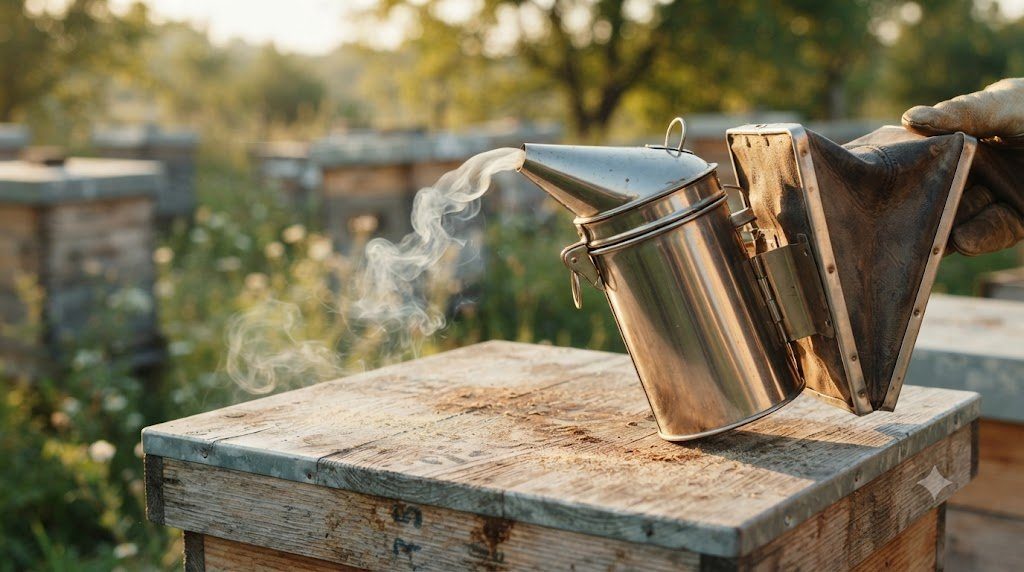
| Stainless Steel Bee Smokers | Creosote tar around lid rim; clogged bottom grate | Scrape cold creosote with hive tool; soak grate in washing soda (sodium carbonate) | Store indoors out of rain; condition leather bellows annually with neatsfoot oil |
| Steel Hive Tools (J-Hook / Flat) | Propolis, wax, potential AFB endospores | Flame-scorch blade in smoker coals + scrub w/ 91% rubbing alcohol or 10% bleach | Paint handle safety-orange or blaze-yellow so dropped tools are visible in tall grass |
| 304 Stainless Extractors & Tanks | Water-soluble honey + hydrophobic wax flecks | Flush w/ high-pressure COLD water first; wash w/ warm food-grade detergent + air dry | Lubricate bottom nylon/bronze bushing only w/ NSF H1 food-grade white mineral grease |
| Queen Excluders (Welded Wire) | Heavy bridge wax & propolis blocking 4.17mm gap | Freeze at -18°C overnight then snap brittle wax off w/ wire excluder scraper tool | Store flat on a level shelf (Hanging bent wire excluders widens gaps and lets queens pass!) |
Selecting the Right Hive Tool: Classic Flat vs. Italian J-Hook vs. Frame Grip
Walk up to any commercial beekeeper’s truck and you will find three distinct steel leverage instruments, each engineered for a specific mechanical task at the hive:
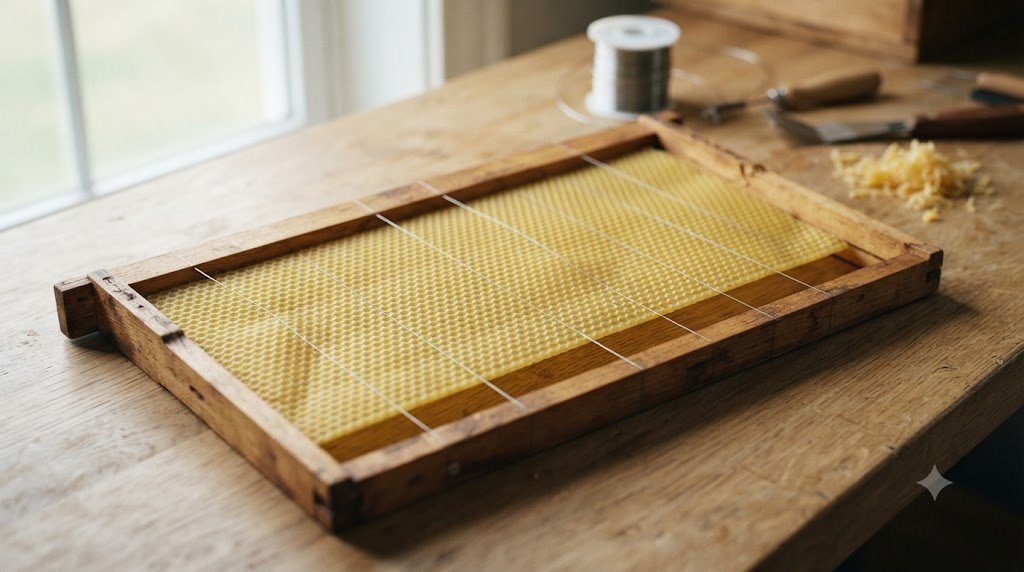
- The 10-Inch Standard Flat (Kelly) Hive Tool: Features a wide, flat ground chisel blade on one end for sliding horizontally between propolized super seams and scraping bottom boards, paired with a 90-degree bent scraper hook on the opposite end. It excels at heavy box separation and propolis cleaning without denting soft pine frame ears.
- The Italian J-Hook Frame Lifter Tool: Features a sharpened Curved J-hook with a beveled fulcrum pivot tooth. By hooking the tip of the ‘J’ beneath the frame ear lug to be lifted while resting the pivot tooth on top of the adjacent frame shoulder, pressing down on the handle converts your hand motion into a smooth 5:1 vertical mechanical jack—lifting the tightest propolized frame straight up without twisting your wrist!
- Spring-Loaded Cast Aluminum/Stainless Frame Grips: Clamps onto the center of the wooden top bar like a mechanical hand, allowing one-handed frame lifting when holding a smoker or queen-marking cage in your other hand.
Because propolis consists of 50% lipophilic plant flavonoid resins and 30% beeswax, soap and water alone merely smear sticky propolis across your hands! Keep a spray bottle of 91% Isopropyl Alcohol (rubbing alcohol) or a tub of Washing Soda (Sodium Carbonate, pH 11.5) in your honey house: alcohol dissolves sticky propolis resins on contact in 3 seconds, leaving hands and stainless steel spotless!
Frequently Asked Questions: Suits, Smokers, Frames, and Extractors
Why do bees keep stinging through my ankle socks even when wearing a full suit?
When bees are shaken off frames or bumped during an inspection, hundreds of disoriented older bees fall onto the grass around your boots. Honey bees possess a hardwired negative gravitaxis reflex: when dropped on the ground, they immediately walk upward in search of dark crevices—climbing straight over low top shoes and stinging through thin cotton athletic socks where the Achilles tendon stretches the fabric tight! Always wear tall leather or Muck/Wellington boots and pull the elastic ankle cuffs and stirrup straps of your bee suit down over the outside of the boot shaft.
Can I use a standard kitchen toaster-oven or hair dryer to uncap honey frames?
While a commercial electric heat gun (held 6 inches away and swept rapidly across the comb face for 2 seconds) can melt thin virgin wax cappings open through thermal expansion of the tiny air pocket trapped beneath each capping, prolonged hot air blows molten wax droplets into the honey and risks overheating the surface layer. For 5 to 50 hives, a cold serrated knife paired with a stainless steel cappings scratcher fork (or a thermostatic electric uncapping plane) produces cleaner combs and yields valuable pure wax cappings.
How do I stop my honey extractor from ‘walking’ and vibrating across the floor?
Even a radial extractor loaded with 18 frames will vibrate violently during the initial 60 seconds of spinning if three heavy 7-pound frames sit on one side of the reel while three light 3-pound frames sit opposite them! Always weigh frames by hand as you uncap them and load frames of equal weight directly across from each other (180 degrees opposite, or in balanced 120-degree triads). Additionally, bolt the extractor legs to a 4×4-foot sheet of 3/4-inch marine plywood resting on thick rubber anti-vibration pads so your own foot weight standing on the plywood platform anchors the drum solidly in place.